If you’ve ever worked with injection molding, you’ve probably seen those robotic arms zipping around a machine, picking up molded parts, inspecting them, and placing them on a conveyor—all in seconds. As a supplier of injection molding robots, I get asked this question all the time: “What’s the maximum number of axes these bots can have?” It’s not a one-size-fits-all answer, and picking the right axis count makes a huge difference in how your whole production line runs. Let’s break this down like I would if you were standing in our warehouse, asking me over a cup of coffee. Injection Molding Robot
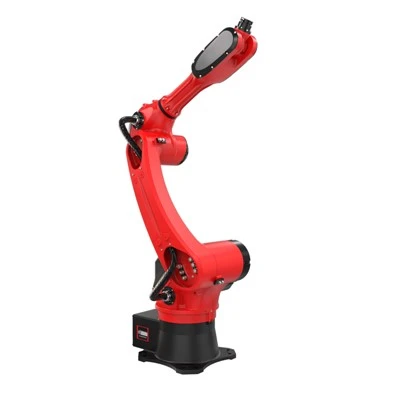
First, let’s get what “axes” actually means, because a lot of people mix it up. An axis is just a single direction a robot can move. For example, a basic 2-axis robot might slide back and forth along one line (axis 1) and up and down along another (axis 2). That’s enough for super simple jobs, like grabbing a flat plastic tray from an injection machine and dropping it onto a nearby shelf. But most injection molding tasks aren’t that simple anymore. Small, intricate parts—think a tiny phone charger connector or a medical component with tight tolerances—need to twist, turn, and reach weird angles. That’s where extra axes come in.
For years, the standard for most mid-sized molding jobs was 5-axis robots. These have three linear axes (X, Y, Z for sliding, lifting, reaching out) and two rotational axes (usually for twisting the end tool, called an end effector, and bending the wrist so the tool can angle to get into corners of a molded part). 5-axis bots are super versatile—they can handle most everyday jobs: removing parts from the mold, trimming excess flash, even sorting parts by color or size. We sell a ton of these because they’re flexible enough for 90% of our customers’ needs, without being overkill.
But lately, we’ve been seeing more customers ask for 6-axis robots, and even 7-axis. Wait, why would anyone need more than 5? Let’s take a real example: a customer who makes car dashboard panels. Those panels have lots of little cutouts, buttons, and curved edges, and sometimes the part comes out of the mold at a slight angle. A 5-axis robot might struggle to reach a tight spot near the dashboard’s edge without bumping into the mold machine or the conveyor. A 6-axis robot adds a sixth rotational axis, usually a base rotation—so the whole arm can spin left or right, not just slide back and forth. That extra rotation gives it way more range of motion, so it can reach awkward places without awkwardly maneuvering the rest of the line.
Now, 7-axis is where things get wild. This is the maximum I’ve ever seen in commercial injection molding robots, and it’s not for casual use. 7-axis adds a seventh linear axis, which is an extra telescoping section in the arm. So the robot can not only reach out, lift up, and twist, but also extend or retract its arm like a telescope. Why would you need that? Let’s say a customer has a production line with multiple injection machines arranged in a tight row, with only a small gap between them. A 5 or 6-axis robot might be too long to reach into the second machine without crashing into the first. A 7-axis bot can extend its arm just far enough to grab a part from the second machine, then retract it immediately to move to the conveyor—no collisions, no downtime. We’ve had a few big auto parts manufacturers buy these for their specialized lines, and the difference in efficiency is insane.
But here’s the thing: more axes don’t always mean better. I’ve seen customers come in asking for the “most axes possible” because they think it’s a upgrade, only to find out they’re paying for features they’ll never use. A 7-axis robot is way more expensive than a 5-axis one, and it needs more programming—if your team isn’t trained to use that extra motion, it’s just wasted money. For small shops making simple parts, a 2 or 3-axis robot is all you need. We even sell basic pick-and-place bots with just 3 axes for customers who are just starting out and don’t have complex needs.
Another point I should mention: axis count ties directly to precision and speed. More axes mean the robot has to coordinate more movements at once, so the motor and sensor tech has to be top-tier. Our 7-axis bots use high-resolution encoders (that’s just the thing that tracks how far each axis moves) so they don’t waver when reaching for a tiny part. If a robot is low-quality, extra axes will just lead to mistakes—like dropping a $0.50 medical part because the wrist was slightly off angle. That’s why we only work with parts manufacturers that have been making robot components for injection molding for decades.
I’ve also had customers ask if there’s such a thing as 8-axis for injection molding robots. I’ve seen prototype stuff in industrial trade shows, but it’s not commercially available yet for this specific use case. Most 8-axis robots are for things like welding or assembly lines, which are way more specialized than injection molding. The extra axes there are for rotating entire workpieces, but in injection molding, the parts are usually fixed in the mold, so adding that extra axis doesn’t add much value for the cost. So for now, the maximum commercially available for injection molding is 7-axis—end of story.
Let me wrap this up with a quick example of when to pick which axis count, because that’s usually what people care about most. If you’re a small shop making simple houseware parts (like plastic cups or bowls), stick to 2-3 axes. You don’t need anything fancy, and you’ll save money. If you’re a mid-sized shop making small electronics parts or packaging, go 5-axis—it’s the sweet spot between cost and flexibility. If you’re a large manufacturer doing complex auto parts or tight-space multi-machine lines, 6 or 7-axis will save you from crashes and slowdowns, even if the upfront cost is higher.
At the end of the day, the “maximum number of axes” isn’t a bragging right. It’s about matching your robot to your specific needs. If you’re not sure which one works for your line, feel free to reach out to talk through it. We don’t pressure anyone to buy the most axes; we help them buy the one that makes their production run smoother and saves them money long-term.
Industrial Robot If you’re looking to upgrade your injection molding robot or replace an old one, we can walk you through all the options, from basic 2-axis pick-and-place to our top-of-the-line 7-axis model. Just get in touch to schedule a chat about your specific production needs.
References
- Industrial Robot Technology: Axis Count for Injection Molding Applications, 2022
- Injection Molding Robots: Motion Control and Axis Configuration, International Manufacturing Association, 2021
- End Effector Guide for High-Axis Robots in Automotive Molding, Global Automation Journal, 2023
Robotic Technology (GD) Co., Ltd.
Robotic Technology (GD) Co., Ltd. is one of the most experienced injection molding robot manufacturers and suppliers in China, also supports custom service and one year warranty. Please feel free to wholesale CE approved injection molding robot for sale here from our factory. Contact us for quotation.
Address: Room 102, No. 30,Hengfeng 2nd Road,Daguo, Changping Town, Dongguan City,Guangdong,China
E-mail: admin@iroboticplus.com
WebSite: https://www.rb-tic.com/
