If you’re in the market for fully automatic production lines, you’ve probably heard random stuff about “automation levels” and wondered what that actually means for your bottom line. Let’s cut through the jargon—no stuffy corporate lingo here, just straight talk from a guy who’s been supplying these lines for over a decade. Fully Automatic Production Line
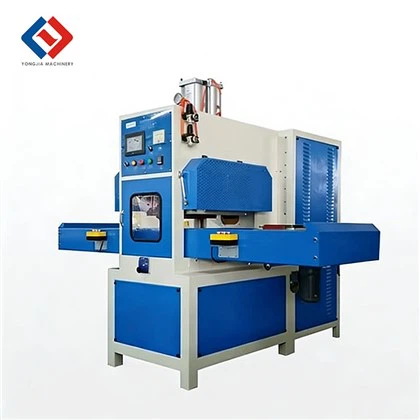
I’ve seen so many folks either overbuy a system that does way more than they need or skimp and end up with a line that breaks down nonstop. That’s why knowing the different automation levels is non-negotiable. It’s not just about flashy robots on a factory floor; it’s about matching the tech to your specific product, output goals, and budget. Let’s break it down like I would to a customer walking through my shop for the first time.
First, let’s start with the basics: what’s a “fully automatic production line” anyway? For us, it’s not just a line that doesn’t have a guy standing there tightening bolts. It’s a sequence of machines, conveyors, sensors, and controls that work together without constant hands-on intervention—no one loading parts every two minutes, no one stopping the line because a machine glitches mid-cycle. But here’s the thing: not all fully automatic lines are created equal. The Automation Levels (yep, we abbreviate it to ALs around the shop) are a spectrum, not a one-size-fits-all box. We categorize them from AL 1 to AL 5, and each level solves a different problem.
Let’s jump into AL 1 first. This is the entry-level for fully automatic lines, and I don’t want you to write this off as “not real automation.” AL 1 lines are what we install for small to medium batches of consistent products. Think about a snack bar wrapper line, or a basic battery assembly line that makes the same 18650 cell every single run. Here’s how it works: all the core functions are automated, but the line still needs a human to monitor it for things like raw material supply (like restocking plastic pellets or snack dough) and to step in if a part jams. The key here is that once you hit “start,” the machines handle the repetitive stuff—feeding, forming, wrapping, and basic quality checks like counting how many finished products come off the line.
Wait, let’s be clear: AL 1 doesn’t mean zero human touch. A lot of new guys think “fully automatic” means no humans at all, but that’s a misstep. For a bakery that does 50,000 chocolate chip cookies a day, AL 1 is perfect. It cuts down labor costs by 60% compared to a manual line, and you get way more consistent products. The controls here are pretty straightforward—PLCs (programmable logic controllers, but we just say PLCs) that run pre-set cycles. No fancy AI here, just reliable, repeatable hardware that does one thing really well. The downside? You’re stuck with that specific product. If you decide to switch to oatmeal raisin cookies, you’ll have to reprogram a bunch of settings and maybe swap out a few tooling parts. That’s why AL 1 is for businesses that don’t plan to change their product line much, or can wait for a quick changeover (like 15 minutes or less).
Next up is AL 2, which is where we start seeing lines that can handle a bit more flexibility. AL 2 builds on AL 1 by adding semi-automatic changeover between similar products. Let’s say you run a phone charger assembly line, and you make two versions: one for Android, one for Apple. With AL 2, you don’t have to have a crew of techs come in for an hour to swap parts and re-program. The line has a touchscreen HMI (human-machine interface, again, we keep it casual) where you select “Android” or “Apple” on the menu, and it adjusts feeder speeds, robot positions, and torque settings automatically.
Human intervention here is way less about day-to-day operations and more about maintenance. You still need someone to refill raw materials, but if a small part breaks, the line can even log an error message and tell you exactly which component to replace, instead of you guessing. We installed an AL 2 line for a lighting company last year that makes both residential and commercial LED bulbs. They used to have to shut down the line for 45 minutes to switch between models; now it’s 5 minutes, and their output went up by 20% because downtime is way lower. AL 2 is a sweet spot for most mid-sized manufacturers—enough flexibility to grow, but not so complicated that you need a PhD to run it. The tech here is still mostly PLC-based, but with better connectivity between machines, so they “talk” to each other instead of operating as separate units.
Now, AL 3 is where things start to get smarter. This level introduces basic sensor integration that can catch defects on the fly and adjust the line without human input. Let’s take a pharmaceutical vial filling line as an example. If a sensor detects that a vial is cracked mid-fill, AL 3 doesn’t just stop the line—it diverts the bad vial to a reject bin, adjusts the fill volume for the next vial to make up for the lost material, and keeps running. No one has to press a “resume” button (though we still have a monitoring station, just in case).
What makes AL 3 different from AL 2 is the closed-loop control system. Instead of the PLC just following a pre-set program, it uses real-time data from cameras, pressure sensors, and weight sensors to make small tweaks. For a medical device company, this is game-changing because defects aren’t just costly—they’re a compliance risk. Before AL 3, they’d have to pull a sample every 10 minutes and inspect it manually, which added labor and slowed down output. Now, the line does 100% inspection automatically, and only stops if there’s a major issue (like a raw material shortage). We did a retrofitted AL 3 line for a small insulin pen maker, and their defect rate dropped from 2.1% to 0.3%—that’s a huge win for their bottom line and their customers. AL 3 is also where we start adding basic data logging, so you can track output, downtime, and defects without manually writing it down.
AL 4 is the level we call “adaptive automation,” and it’s for businesses that need high flexibility and minimal downtime. This is where AI and machine learning start to play a role, but not the scary “robots take over” kind—just tools that learn from the line’s performance over time. Let’s say you run a packaging line for cosmetics, and you sell 12 different lipsticks in various tube sizes, colors, and packaging styles. With AL 4, the line doesn’t just switch between pre-set modes—it learns the best speed for each product combination, adjusts feeder positions if a tube is slightly misaligned, and predicts when a part will wear out before it breaks.
Last year, we installed an AL 4 line for a beauty brand that used to change their packaging every 2 months for limited-edition collections. Before, each changeover cost them 3 hours of downtime and $1,200 in lost output. Now, they can switch to a new product in 10 minutes, and the line’s AI adjusts to the new product’s specs on its own after the first run. The other big thing about AL 4 is remote monitoring. If a part in Germany needs a replacement, our team can pull the error log, diagnose the issue, and even send the tech the right part to fix it, without the local team having to guess. That cuts service time by 70% compared to older lines. AL 4 is for manufacturers that value agility—whether you’re doing custom batches, seasonal products, or just want to minimize unplanned downtime. It’s not cheap, but the ROI pays off fast if you’re updating your products regularly.
Then there’s AL 5, the top tier of fully automatic production lines. This is the lights-out manufacturing level—you can run the line 24/7 with almost no human presence on the factory floor. AL 5 lines are fully integrated with your ERP (enterprise resource planning) system, so when a customer orders 10,000 custom water bottles, the ERP sends the specs directly to the line, and it produces exactly that order without anyone having to input a single setting. It can even coordinate with a robotic warehouse to pull raw materials and ship the finished products straight to a truck, all without a human touching the product.
We’ve only installed a handful of AL 5 lines so far, mostly for big consumer electronics companies that make custom phone cases. One of our clients runs two AL 5 lines that make 50,000 unique cases a week. They check in on the system once a day, just to make sure everything is running, and that’s it. No overtime, no extra shifts, no mistakes from human operators. The catch? AL 5 requires a really solid IT infrastructure, and you need a team that can maintain the AI and integration. It’s not for every business—if you only make one product, AL 1 or AL 2 is way more cost-effective. But if your business is scaling fast and you need zero downtime, AL 5 is the way to go.
Now, let’s talk about what this all means for you, as a business owner or operations manager. I can’t tell you how many times a customer comes to me and says, “I want a fully automatic line, so give me the most expensive one.” That’s a mistake. If you’re a small business making one type of candle, AL 1 is more than enough, and you’ll save $50,000 that you can put into marketing or raw materials. If you’re a mid-sized company making multiple products, AL 2 or AL 3 will give you the flexibility you need without overspending. If you’re a brand that releases new products every quarter, AL 4 is worth the investment, and if you’re looking to scale to lights-out operations, AL 5 is the end goal.
Wait, let’s clear up another common myth: “more automation means more jobs lost.” Not with the lines we supply. We see it all the time—factories that used to have 15 people on the line now have 2, and those jobs are way better. Instead of standing there tightening lids all day, their workers are monitoring the line, fixing small issues, and even maintaining the sensors and robots. It’s a shift from manual labor to skilled labor, which is a good thing for everyone involved.
If you’re currently running a manual line and looking to upgrade, or you’re in the market for a new fully automatic production line, I can help you figure out which AL is right for you. We don’t do one-size-fits-all quotes—we’ll come out to your facility, talk through your output goals, your current pain points, and how often you plan to change your products, then put together a line that fits. No jargon, no hidden fees, just a system that works for your business.

Don’t waste another day dealing with constant line downtime, inconsistent products, or high labor costs. Connect with our team to walk through your needs, and we’ll help you pick the right automation level for your fully automatic production line. We’ve got the experience, the tech, and the support to make it happen.
Urine Bagblood Bag Production Line References
- Groover, M.P. (2020). Automation, Production Systems, and Computer-Integrated Manufacturing. Pearson Education.
- International Society of Automation (ISA). (2022). Automation Levels for Manufacturing Systems: A Practical Guide. ISA Press.
- "Lights-Out Manufacturing: Trends and Best Practices." IndustryWeek, 15 Mar. 2023.
- National Institute of Standards and Technology (NIST). (2021). Flexible Automation for Small and Medium Manufacturers. U.S. Dept. of Commerce.
- "ROI Calculations for Industrial Automation Systems." Control Engineering, vol. 66, no. 8, Aug. 2022.
Dongguan Yongjia Machinery Equipment Co., Ltd.
We are one of the most reliable fully automatic production line manufacturers and suppliers in China, specialized in providing high quality customized service. Please feel free to wholesale advanced fully automatic production line at low price from our factory. For quotation, contact us now.
Address: No. 240, Chashan South Road, Chashan Town, Dongguan City, Guangdong Province, China
E-mail: info@yjwelding.com
WebSite: https://www.yjhighfrequencymachine.com/
