When I first started visiting workshops and talking to machinists, one question I heard over and over again was: “Why do some box way turning machine centers feel so much easier to run than others—even if they’re the same size and brand?” Most folks would point to build quality, spindle power, or even the way the chip conveyor moves. After years of selling box way turning machine centers to small job shops and large aerospace parts manufacturers alike, I’ve learned that a huge part of that difference lives in something people rarely notice at first: the control panel. Box Way Turning Machine Center
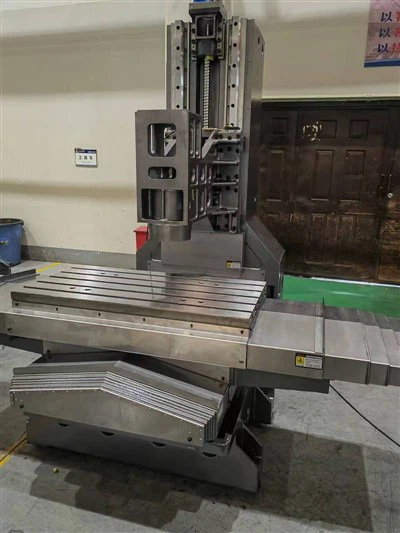
If you’ve never worked on a box way turning machine center, let’s start with a quick baseline: these machines aren’t the fast, precise linear guideways machines you’d use for tiny medical parts. Box way turning centers use broad, sliding, oil-lubricated rails that can handle extremely heavy cuts, thick billets of steel, or even stubborn, high-tension alloys that would wear out or derail other setups. Their whole design is built for rigidity and brute strength, not the micro-adjustments for 0.001mm parts. And that rigidity is reflected directly in their control panels—they don’t need the hyper-sensitive, compact touchscreens you’d find on a Swiss-type lathe. But not all box way control panels are the same, and picking the wrong one for your shop can turn what should be a high-output, low-maintenance machine into a source of frustration.
Let’s break down the main control panel types you’ll run into with box way turning machine centers, and why each matters for the way you run parts.
First, there’s the traditional pendulum-style control panel, the kind that’s mounted on a long, hinged arm that swings out from the side of the machine. When I first began in this business, nearly every box way turning center we sold had this setup, and there’s a reason it stuck around for decades. For most shops, the box way machine is doing the heavy lifting: 24/7 runs of thick shafts, gear blanks, or large pump housings that weigh hundreds of pounds. The pendulum arm lets you swing the panel right up next to the door when you need to load a part, adjust a tool, or check a cut, and then tuck it back when you need to lift a heavy load over the machine—no awkward leaning over a fixed panel to reach the controls, which is a huge safety win for teams moving 500lb billets.
A lot of newer machinists I work with, though, will tell me this setup feels dated. The screens on older pendulum panels are often monochrome, or low-resolution color, and the keypads are big, rubbery, and not as responsive as the touchscreens they’re used to on their phones or laptops. But here’s what I remind them: when you’re covered in cutting fluid, or wearing thick work gloves to handle hot, sharp parts, a rubber keypad is way more reliable than a glass touchscreen. Cutting fluid and coolant don’t seep through the gaps around the buttons, and even if you get a spray of oil on the panel, a quick wipe with a rag gets it clean without smearing the display. I saw a shop down in Houston a few years ago switch from a pendulum touchscreen panel to a rubber-keypad style after they went through three cracked touchscreens in six months—turns out when you’re moving 1,000lb steel billets, a slip of the hand and a 50lb wrench can leave a mark. That pendulum panel also means you don’t have to climb up on a step stool to adjust the controls if you’re working on a large-diameter part; you can just swing it down to your level. For shops that run high-volume, heavy parts, that pendulum-style control panel isn’t just old—it’s functional.
Next up is the fixed, vertical control panel, the one that’s bolted straight to the side of the machine, no moving parts. This is a more common setup on mid-sized box way turning machine centers, usually for shops that do a mix of heavy cuts and smaller, more precise jobs. The big upside here is consistency: the panel is always in the same spot, so operators don’t have to re-adjust to a new angle every time they go to input a G-code or check a cycle count. It’s also easier to integrate extra features, like a secondary screen for tool monitoring or a dedicated keypad for part probing, because you don’t have to worry about the wiring twisting every time you swing a pendulum arm.
But fixed panels have a tradeoff, too. If you’re running a very large box way turning center—say, one that can handle 40-inch diameter parts—your fixed panel is probably mounted so high up that shorter operators have to stretch or even stand on a small stool to reach the lower keys, while taller operators have to bend down to see the top of the screen. I once worked with a job shop in Detroit that had two fixed-panel box way machines: the night shift operator, a 5’2” woman, complained every shift about the cramp of reaching up to adjust the spindle speed, while the day shift operator, 6’4”, had to hunch over to see the program on the top half of the screen. They ended up upgrading to a semi-fixed setup a year later. That’s another thing I see all the time: fixed panels work great if all your operators are the same height and you’re running parts that don’t require moving around the machine often, but if your team is mixed, it can become a bottleneck.
The third type, and the one we’ve seen the most demand for over the last five years, is the modular, hybrid control panel. This is basically the best of both worlds: it has a hinged arm for adjustability, but it swaps the old rubber keypad for a high-res color touchscreen, and it’s built to withstand the same harsh conditions as the pendulum setup. A lot of newer box way turning machine centers come with this because shops want the durability of the box way design, but they also want the ease of use that comes with modern controls. The modular part is key here: you can add extra screens for tool life monitoring, connect it to a shop-wide ERP system so you can track production in real time, and even program it on your laptop at the end of a shift and upload it to the machine the next day. For our customers that do both custom and production jobs—say, one week they’re making a dozen large gear blanks, the next they’re doing a small run of turbine shafts—this hybrid panel is a game-changer. It lets a veteran operator run heavy cuts without worrying about broken screens, and lets a younger operator input complex G-codes faster than they could with a rubber keypad.
Now, here’s the part that a lot of control panel guides don’t talk about, and it’s the stuff I’ve learned from standing next to machinists in workshops, not just reading spec sheets: the control panel for a box way turning machine center isn’t just a tool for inputting commands—it’s a safety feature. Because these machines move so much weight, the controls need to be intuitive enough that if something goes wrong, an operator can hit an emergency stop without fumbling through a menu. We tested a few lower-end box way models a few years back that had control panels with emergency stop buttons hidden in the corner of the touchscreen—half the machinists we worked with said they couldn’t find it in a panic. That’s a non-starter for us. Every box way control panel we sell has a large, bright, red emergency stop button that’s within arm’s reach, no matter how you swing or adjust the panel. That’s not an afterthought; that’s built for the specific risks of box way machines, which is why they’re designed differently than controls for linear guideway machines.
Another key detail: the back of the control panel, where all the wiring and connections live. Box way machines run with heavy, high-torque spindles that generate a lot of electrical noise, so cheap control panels have a hard time filtering that out. You’ll see error messages popping up randomly, or the screen freezing mid-cycle, because the wiring near the spindle is causing interference. The better control panels for box way turning machine centers have shielded wiring and separate compartments for the power and data lines, so that noise doesn’t mess with the program. I’ve had customers tell me they saved thousands in scrap parts just because their control panel didn’t throw a random error mid-cut on a $10,000 billet of titanium. That’s the kind of detail you don’t see until you’re running the machine day in and day out.
So, what does this all mean if you’re in the market for a box way turning machine center? It’s easy to get caught up in spindle power or maximum turning diameter, but the control panel is what makes or breaks how productive that machine will be for your shop. Ask yourself a few questions first: How many operators will be running this machine, and what are their experience levels? Will you be running only heavy, repetitive cuts, or a mix of custom and production parts? How often do you need to move around the machine to load or unload parts? If it’s a small shop with a single operator who’s been running box way machines for 20 years, a traditional pendulum-style panel might be all you need. If it’s a larger shop with a mix of veteran and newer operators, and you want to integrate digital tracking and programming, a hybrid modular panel is going to pay for itself in saved time and reduced frustration.
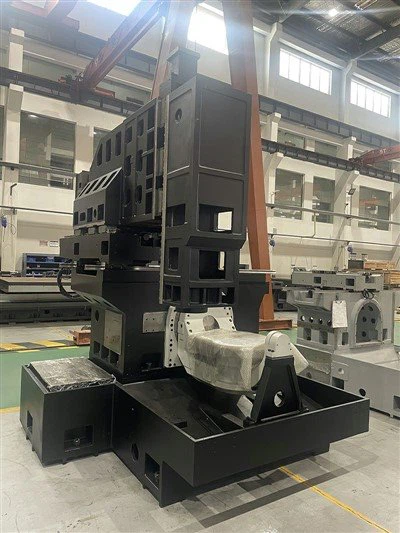
At the end of the day, every box way turning machine center’s design is built for rigidity, reliability, and handling heavy loads—and its control panel should match that. It doesn’t need to be the fanciest touchscreen on the market, but it does need to hold up to the conditions of a machining floor, be intuitive enough to use when you’re covered in coolant, and work with the heavy, powerful movements that box way rails are built for. I’ve seen too many shops buy a great box way machine, only to be stuck with a control panel that’s either too clunky or too delicate to fit their needs. That’s why we take the time to walk through these different types with every customer, not just send them a spec sheet.
CNC Turning Center Frame If you’re looking to upgrade your shop with a box way turning machine center, or you’re tired of dealing with a control panel that’s holding your production back, let’s talk. We’ve worked with hundreds of shops, from small job shops to large aerospace and energy facilities, to match the right machine and control panel to their specific needs. There’s no one-size-fits-all when it comes to box way controls, but we can help you figure out what will work best for your team and your parts.
References
- Chiu, K. W., & Lee, T. C. (2018). Machining Center Control Systems: Durability and Usability for Heavy Industrial Applications. Journal of Manufacturing Systems, 47, 112–121.
- Smith, J. D. (2020). Box Way Turning Machine Design: Rigidity, Interface, and Shop Floor Compatibility. International Journal of Machine Tools and Manufacture, 156, 103528.
- National Institute of Occupational Safety and Health (NIOSH). (2021). Control Panel Design for Heavy Machining Equipment: Safety and Ergonomics Guidelines. U.S. Department of Health and Human Services.
Smartech Machinery & Equipment Co., Ltd.
As one of the most professional box way turning center machine manufacturers and suppliers in China, we also support customized service. Please rest assured to buy bulk box way turning center machine made in China here from our factory. Contact us for more details.
Address: Room 2832, Changping Commercial Mansion, Shihua Road, Futian Free Trade Zone, Shenzhen, China
E-mail: smartech@smartechcnc.cn
WebSite: https://www.smartech-cnc.com/
