If you’ve ever walked through a construction site, browsed a hardware store for drywall or insulation, or even remodelled a room in your home, you’ve probably never stopped to think about the role a building materials flammability tester plays behind the scenes. As someone who’s spent the last decade designing, refining, and supplying these testers for a living, I get asked one question more than any other: “Can your flammability tester work on building materials with different thicknesses?” Building Materials Flammability Tester
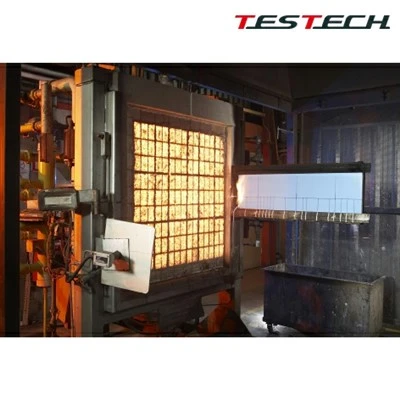
It’s a fair question, too. Building materials aren’t one-size-fits-all. A 12mm drywall panel used for a living room wall is very different from the 25mm fire-rated drywall used in a garage or a commercial stairwell. Spray-applied intumescent coating on a steel beam might be only 2mm thick, while the mineral wool insulation stuffed between floor joists could be 100mm deep. If a tester can’t accurately evaluate all these variants, it’s useless for architects, fire marshals, or manufacturers who need to certify their products meet local building codes.
Let’s start with the basics: what a building materials flammability tester actually does. At its core, it’s a piece of testing equipment that simulates real-world fire conditions to measure how a material reacts when exposed to heat and flame. Most standard models follow protocols like ASTM E119 (for structural fire testing) or EN 13501-1 (for European classification of building materials’ fire behaviour), but the key part here is how they handle sample size—and specifically, thickness. For years, the industry’s default approach was to use a “standard test sample” that matched the thickness specified in the code, often ignoring that many materials are used in thicker or thinner variants. That’s where a lot of older testers fall short. They have fixed sample holders, fixed flame height settings, and can’t adjust to accommodate thinner or thicker pieces without a custom modification that’s expensive and time-consuming.
Let me give you a concrete example from my own work. A few years back, I was working with a client who manufactured intumescent coatings for steel structures. They were testing their product at a 3mm thickness per the standard EN 13501 protocol, but their largest clients—shopping mall developers and high-rise building contractors—were asking about applications at 8mm and 12mm thicknesses to meet stricter fire codes in seismic zones. Their old tester couldn’t hold thicker samples; the sample holder was too shallow, and adjusting it risked skewing the flame exposure distance, which would make the test results invalid. They ended up sourcing a tester from our line that features an adjustable sample carriage, which lets you set the depth of the holder to fit materials from 1mm all the way up to 150mm thick. The results they got from the thicker samples matched exactly what their on-site fire tests showed, and they were able to get their product certified for those higher thicknesses. That’s the kind of solution that makes the difference between a tester that’s a box in a lab and one that actually serves the needs of the industry.
Now, let’s talk about why thickness even matters for flammability testing. Thin materials, like 1mm vinyl flooring, will ignite faster, burn more quickly, and produce more smoke than a thicker, denser material like 50mm concrete block. But thick materials—like 100mm mineral wool—behave differently: the outer layer might char or melt, but the inner layers remain unburned, which can change the fire spread rate and the time it takes for the material to fail. If you test a 50mm mineral wool sample in a tester designed for 25mm, the flame will reach the back of the sample faster than it would in real life, leading to a false, overly pessimistic result. Conversely, testing a thin foam insulation in a holder meant for thick plywood might mean the sample is not held taut, so it curls when heated, changing how the flame interacts with it. Both scenarios waste time, money, and can lead to products being incorrectly certified.
Another point that’s often overlooked: adjustable heat and flame parameters. It’s not just about holding the sample—you also need to adjust the intensity of the flame to match the material’s thickness. A thin, highly flammable material doesn’t need a 50kW flame to test its ignition; a 10mm thick fire-rated concrete needs a much higher heat output to see if it will fail. Many basic testers have a fixed flame setting, which works for standard samples but fails for materials at the extremes of thickness. For example, a 2mm thick acrylic sheet will ignite with a 10kW flame, but a 100mm thick cementitious board won’t even show signs of charring at that level. Our testers let you adjust the heat flux (the amount of heat energy applied to the sample) from 10 kW/m² up to 100 kW/m², so regardless of whether you’re testing a thin decorative laminate or a thick structural fireboard, the test conditions are relevant to the real application.
I know some of you in the industry might be thinking, “But what about standard test protocols? Do I have to re-learn everything if I use an adjustable tester?” That’s a valid concern. The last thing anyone wants is to adapt their testing process so much that their results are no longer comparable to third-party certifications. The good news is that the best modern building materials flammability testers balance adjustability with adherence to global standards. For example, ASTM E119 specifies a standard sample size of 100mm x 1000mm for wall panels, but it also allows for “extended sample” testing for materials over 50mm thick. Our testers come pre-loaded with standardized test setups for all major codes, but they also have a “custom test” mode that lets you adjust sample holder depth, flame intensity, and exposure time while still logging data in a format that’s accepted by fire testing laboratories and building code authorities. We’ve worked with testing firms in 12 countries now, and all of them use our adjustable testers to test everything from thin wall coverings to thick structural beams, and their results are always accepted for certification.
Let’s also address a common misconception: thicker materials don’t just need a bigger holder. They need a way to isolate the back of the sample, right? In real life, a 100mm thick insulation panel is installed against a stud wall, so the back of the panel isn’t exposed to flame. If you test that panel with a tester that has an open back, the flame will heat the back of the sample, which doesn’t happen in a real installation, leading to inaccurate results. Our testers feature interchangeable sample backings—you can use an open backing for wall panels, a closed, non-combustible backing for insulation installed against structural elements, or even a steel backing for testing intumescent coatings on steel beams. That means when you test a 25mm thick steel beam with a 5mm intumescent coating, you’re testing it under the exact same conditions as it would be in a building, not a modified test that doesn’t reflect real use.
I want to share a recent experience that really drove this home. Last quarter, we supplied a tester to a large commercial construction firm that was working on a 40-storey office tower. They had to test 15 different types of building materials, ranging from 1mm thick ceiling tiles to 120mm thick concrete floor slabs, plus spray-applied fireproofing coatings in thicknesses from 2mm to 10mm. Their old tester could only handle samples up to 50mm thick, so they were having to send all the thicker samples to an external lab, which cost them an average of $1,200 per test and delayed their product certification by weeks. With our adjustable tester, they can run all their in-house testing in their own facility, adjusting the sample holder, flame intensity, and backing for each material, and only send occasional verification tests to the third-party lab. That’s not only saving them tens of thousands of dollars a year, but it’s also getting their products to market faster, which is a huge win in the competitive construction industry.
Of course, no piece of testing equipment is one-size-fits-all. There are some materials that still require specialized testing, even with the most adjustable tester. For example, testing flexible materials like fabric or foam might require a different sample mounting setup than rigid materials like concrete or steel. But for 90% of the building materials used in construction today—drywall, insulation, fireproof coatings, wall panels, flooring, and structural steel components—a good adjustable building materials flammability tester can handle all thicknesses, without compromising on test accuracy or compliance with global codes.
Here’s the key takeaway: when you’re choosing a flammability tester, don’t just look for something that fits the standard sample size for the code you’re currently using. Think about your future needs. Are you going to need to test thicker materials as your projects get larger? Do you work with specialty coatings that are applied in thin or thick layers? If the answer is yes, then an adjustable tester is not a luxury—it’s a necessity. It eliminates the need for external testing for most materials, cuts down on time and costs, and gives you more control over your quality control process.
At the end of the day, fire safety is non-negotiable. A building’s materials need to perform as advertised, and testing is how we make sure of that. If your current tester can’t handle different material thicknesses, you’re either risking inaccurate results, wasting money on external testing, or both. I’ve been in this industry long enough to know that the best testing equipment is the kind that works as hard as you do, adapting to your needs, not the other way around.
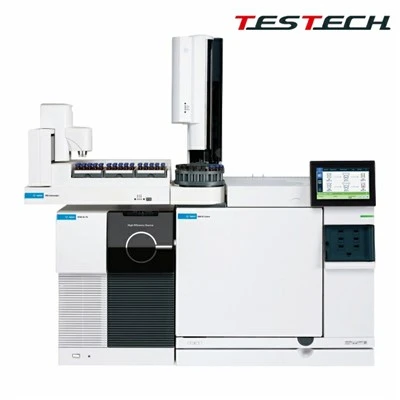
If you’re tired of testers that only work for a narrow range of samples, or if you’re ready to bring in-house testing capabilities for all your building materials, I encourage you to reach out to discuss your specific requirements. We don’t just supply equipment—we work with testing firms, manufacturers, and construction companies to build testers that fit their unique needs, whether they’re testing thin decorative laminates or thick structural fireboards.
Building Materials Flammability Tester References
- ASTM E119, Standard Test Methods for Fire Tests of Building Construction and Materials.
- EN 13501-1, Fire Classification of Construction Products and Building Elements – Part 1: Classification Using Data from Reaction to Fire Tests.
- NFPA 251, Standard Methods of Fire Tests of Building Construction and Materials.
- Drysdale, D. (2011). An Introduction to Fire Dynamics, 3rd Edition. Wiley.
- Quintiere, J. G. (2006). Fundamentals of Fire Phenomena. Wiley.
TESTech Instrument (Suzhou) Technologies
TESTech Instrument (Suzhou) Technologies is one of the most reliable building materials flammability tester manufacturers and suppliers in China. If you’re going to wholesale durable building materials flammability tester, welcome to get quotation from our factory. For price consultation, contact us.
Address: 8/F, R&D and Production Workshop No. 5, Jiangsu Guoqian Technology Innovation Industrial Park, 168 Lüliangshan Road, Huqiu District, Suzhou, Jiangsu Province, China
E-mail: sales@testech.com.cn
WebSite: https://www.testechfiretest.com/
